The FDA Just Set New Lead Limits for Baby Food
In a major move for consumer safety, the FDA has released new guidance that lowers the allowable lead levels in baby and toddler foods. While this may seem like a niche update, it reflects a broader shift in how we think about food contamination, ingredient sourcing, and long-term health.
The FDA’s New Guidance on Lead in Baby Food
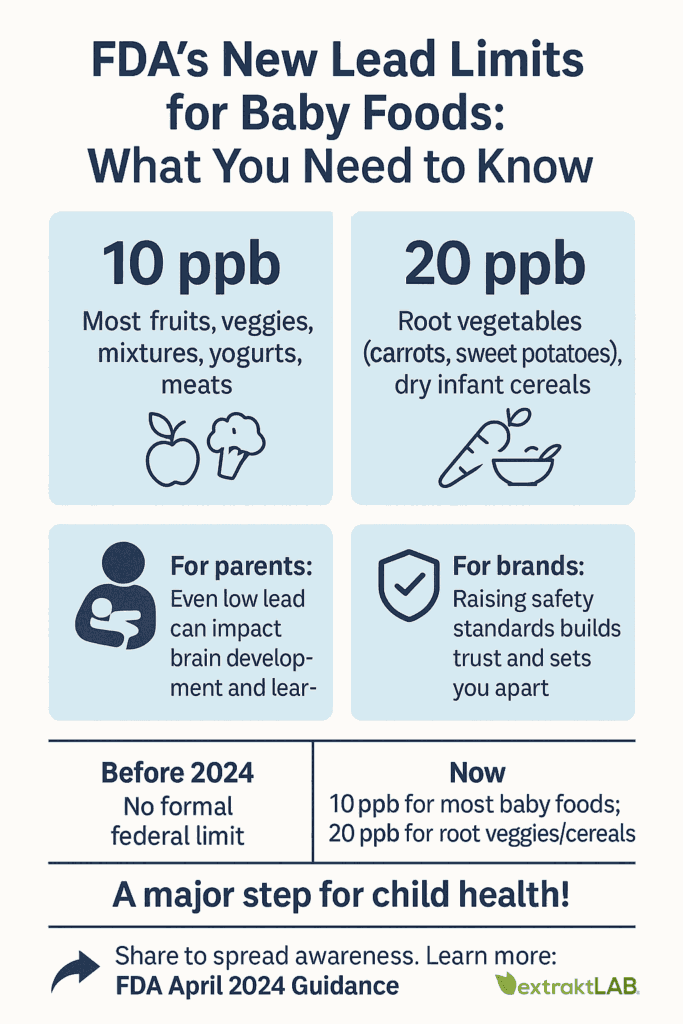
In April 2024, the U.S. Food and Drug Administration (FDA) issued new guidance that sets much lower action levels—a concentration level of a harmful substance that triggers regulatory or remedial action when exceeded—for lead in processed foods intended for babies and young children.
These action levels, 10 parts per billion (ppb) for most products, 20 ppb for certain root vegetables and infant cereals, signal an important shift in how the industry and the public approach food safety for the youngest and most vulnerable consumers.
But this isn’t just about new numbers or regulatory checklists. Lead exposure—even at extremely low levels—has been tied to a range of lifelong effects on children’s health, from cognitive development to behavioral issues. The science is clear: when it comes to lead, lower is always better.
What Exactly Changed?
Until April 2024, there were no formal federal limits on lead in baby or toddler foods in the U.S.—only general food safety recommendations. The new FDA action levels (10 ppb and 20 ppb) mark the first specific, product-focused standard for children’s foods ever set in the U.S.
- 10 ppb: Applies to processed fruits, most vegetables (except root vegetables), mixtures, yogurts, custards, puddings, and single-ingredient meats for babies and toddlers.
- 20 ppb: Applies to single-ingredient root vegetables (like carrots and sweet potatoes) and dry infant cereals.
Why the difference? Root vegetables, which grow underground, are more likely to absorb lead from soil, making a slightly higher—but still strict—limit necessary.
These are “action levels,” meaning they aren’t legally binding. Still, they are strong recommendations backed by public health science and signal what consumers, advocacy groups, and regulators will expect moving forward.
Why It Matters for Parents
Lead is a powerful neurotoxin. Even trace amounts can affect a child’s brain development, attention span, IQ, and behavior. The Centers for Disease Control and Prevention (CDC) and the FDA both agree: there is no safe level of lead exposure for children. Babies and toddlers are especially vulnerable because:
- Their bodies absorb lead more easily than adults.
- Their brains and nervous systems are still developing.
- Baby foods like purees, cereals, and root vegetables are often their primary sources of nutrition.
What Parents Can Do
- Read labels carefully. Ingredient lists and sourcing details matter more than ever.
- Look for transparency. Brands that openly share their testing and quality standards can offer more peace of mind.
- Stay informed. Following updates to food safety guidance helps protect your child’s health now and in the long term.
Why It Matters for Brands
This new FDA guidance represents both a challenge and an opportunity.
Implications For Brands:
- Transparency and accountability: These limits are quickly becoming a new industry baseline. Parents, retailers, and advocacy organizations are watching—and will expect brands to meet or beat these standards.
- Brand reputation: In the era of social media and instant information sharing, a single story about heavy metals in baby food can go viral overnight, affecting trust for years.
- Market advantage: Brands that take a proactive, public stance on reducing heavy metals in their products can set themselves apart as leaders in safety and responsibility.
Brands that invest in safer ingredient sourcing, better testing, and transparent communication will not only help keep children safe—they’ll earn the loyalty of today’s most discerning consumers.
Final Thoughts
The FDA’s update serves as a reminder that food safety isn’t just a regulatory issue—it’s a shared responsibility across the entire supply chain, from regulators and manufacturers to retailers and parents.
Every step taken to reduce heavy metal exposure, however small, helps create a healthier next generation.