

Supercritical CO₂ Extraction Machines and Equipment
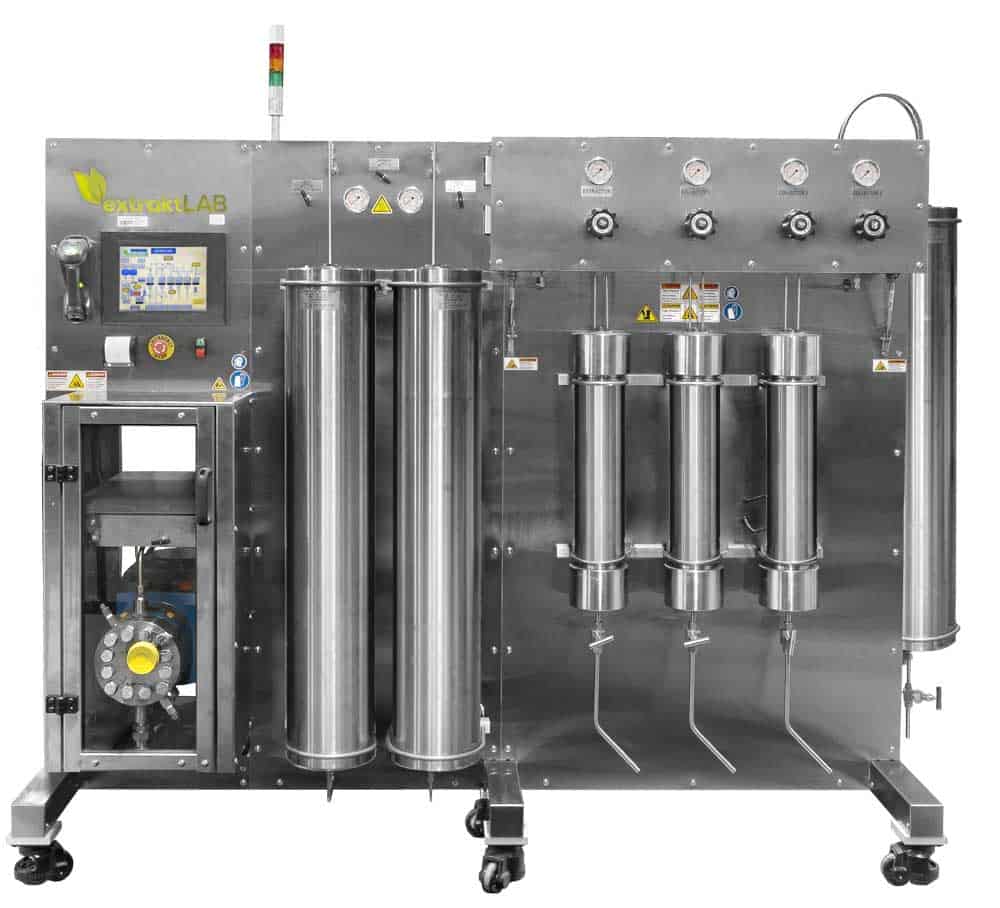
e-180 equipment shown.
A supercritical CO₂ extraction machine raises carbon dioxide above its critical point and passes it through the material to dissolve the target fraction, then collects the extract as the pressure is reduced. Compare vessel configurations, collection options and process records, then match the system to your material, method and facility.
Built in the USA.
- Built in the USA
- 12-month warranty
- Chillers sold separately
Compare CO₂ extractor models
Choose a starting point by extraction-vessel configuration and the control functions your method needs. Vessel volume is not a daily production rating.

R&D extractor
M-2.5
R&D and small-batch methods, with touchscreen logging of temperature and pressure.
- One 2.5 L extraction vessel
- 55–345 bar (800–5,000 psi), −10 to 100°C
- 48.375 × 31.615 × 40.688 in (without light mast); 804 lb; 10.48 ft²
- Optional co-solvent hardware, specified separately
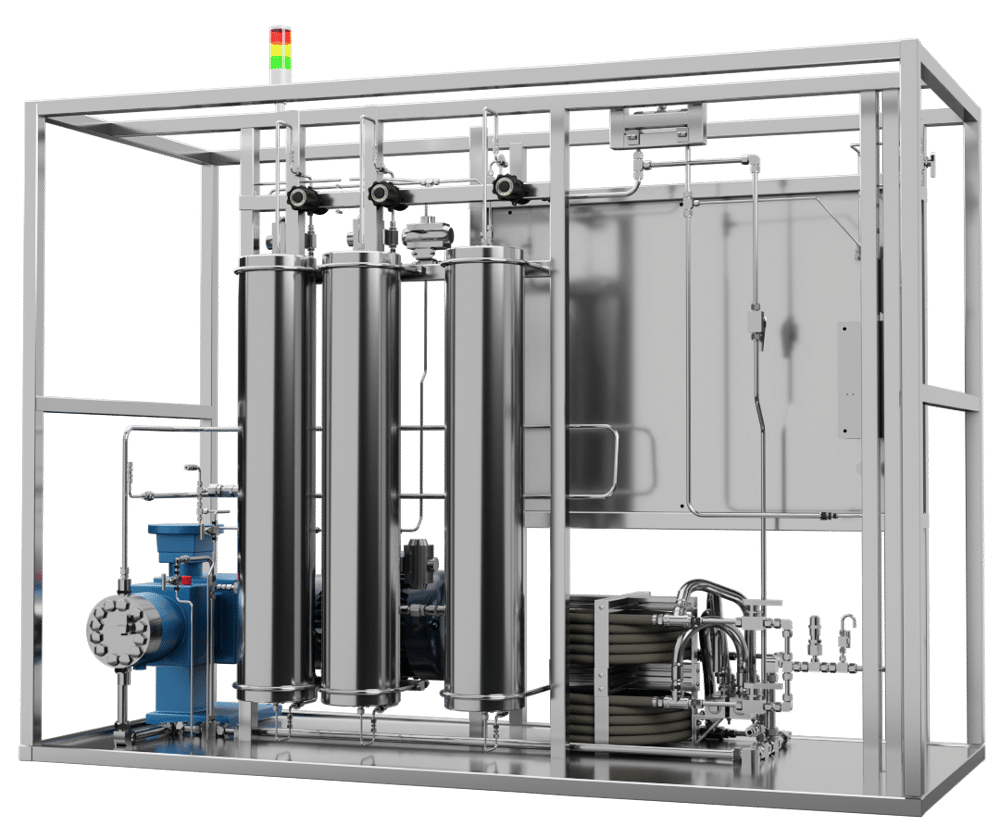
Manual extractor
M-120
Manual operation.
- One 20 L extraction cylinder, collector and recycler
- 5,000 psi (345 bar)
- 99 × 34 × 72 in; 24 ft²
- 208–240 V, 3 phase, 67 FLA
- 5 hp chiller required, sold separately. 12-month warranty
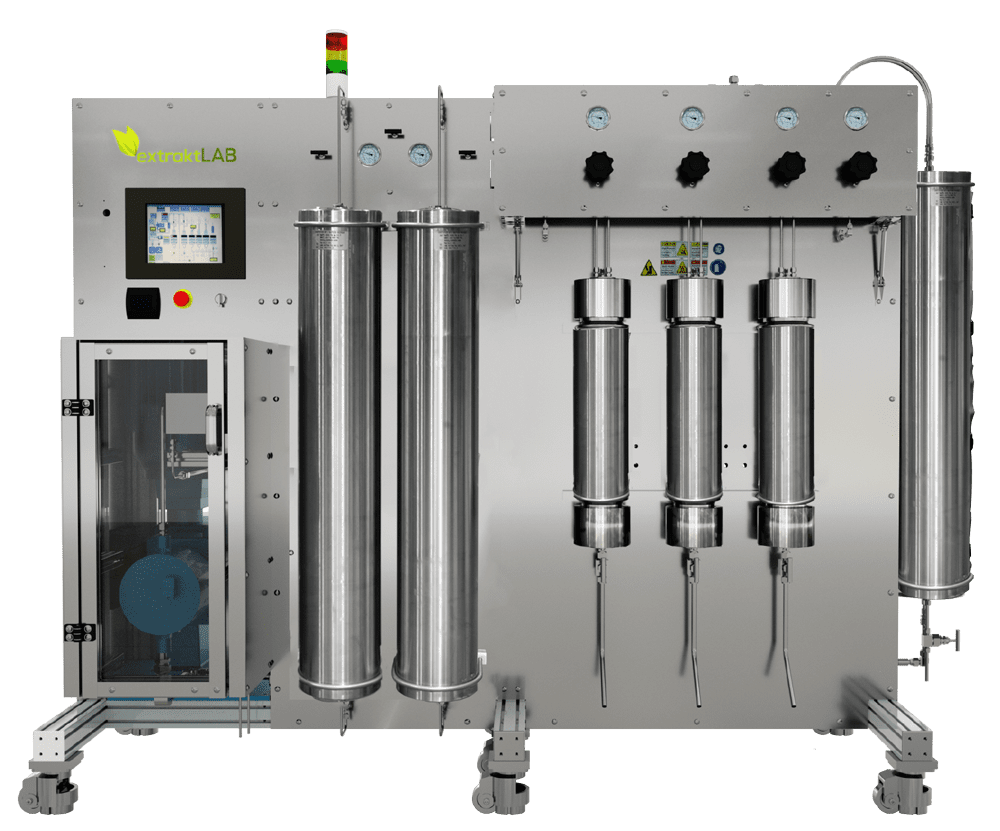
Programmable extractor
e-110
Programmable cycles, independent vessel control and three 2.5 L collection vessels.
- Two 5 L extraction vessels
- 0–345 bar (0–5,000 psi), 25–100°C
- 99 × 34 × 72 in (without light mast); 3,000 lb; 24 ft²
- 5 hp chiller required, sold separately
Programmable extractor
e-140
Programmable methods and cycles with batch, operator and parameter tracking.
- Two 20 L extraction vessels
- 0–345 bar (0–5,000 psi), 0–100°C
- 99 × 34 × 72 in (without light mast); 4,300 lb; 24 ft²
- Optional co-solvent hardware and downstream interface, specified separately
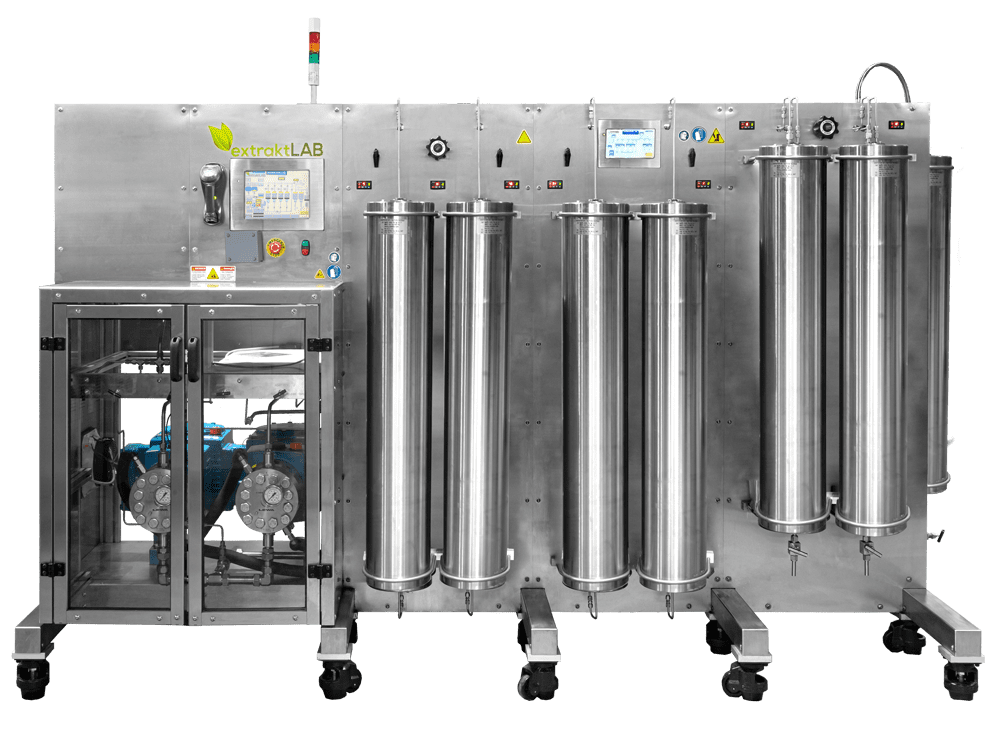
In the CO₂ lineup
e-180
Four 20 L extraction vessels, two 20 L collection vessels and one 20 L recycle vessel. Equipment footprint 48 ft².
- Four 20 L extraction vessels
- 0–5,000 psi (0–345 bar)
- 129 × 53 × 72 in, without light mast; 48 ft² footprint
- Manual or automatic; touchscreen HMI (automation sold separately)
- This page does not publish e-180 daily-throughput figures
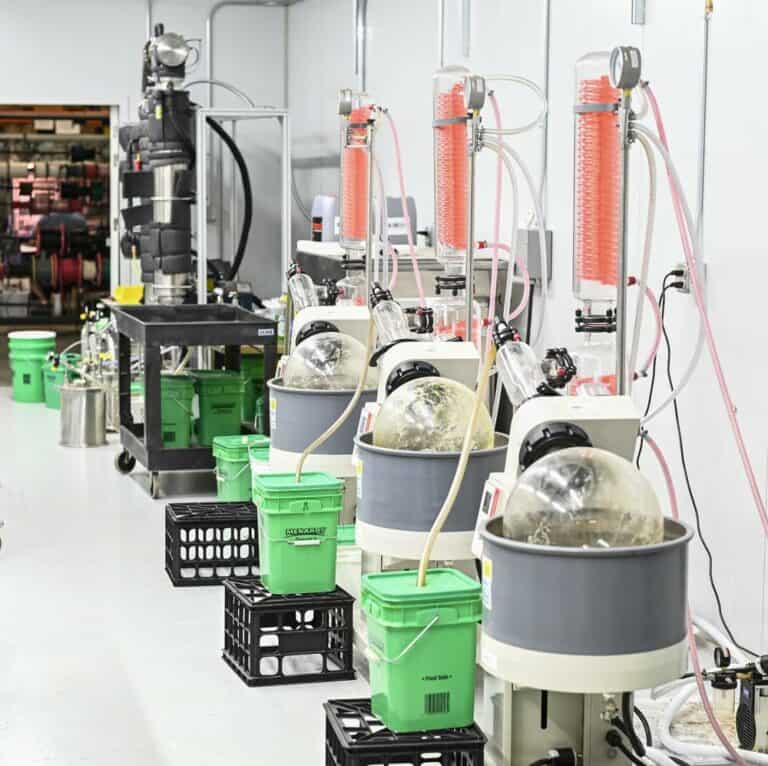
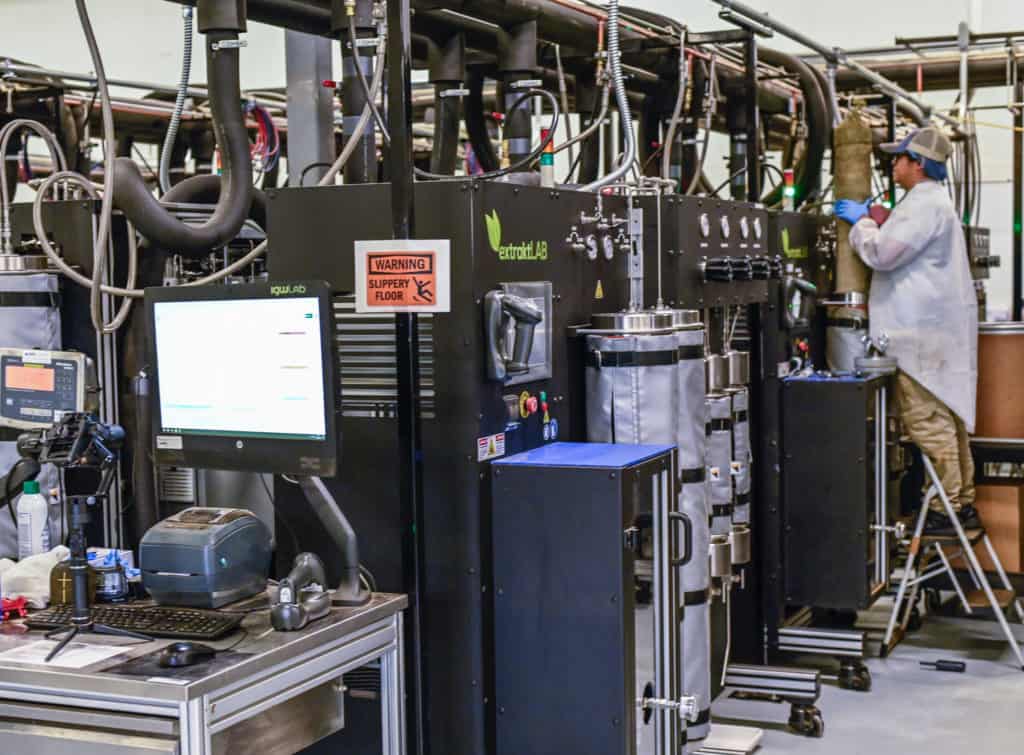
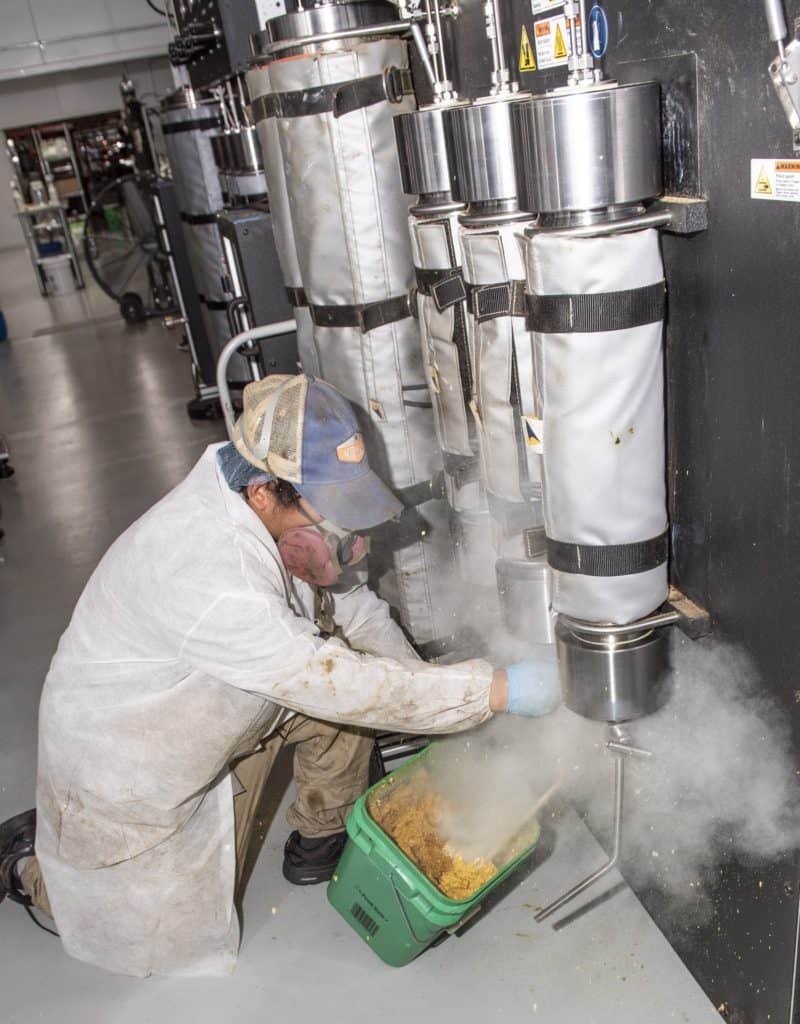
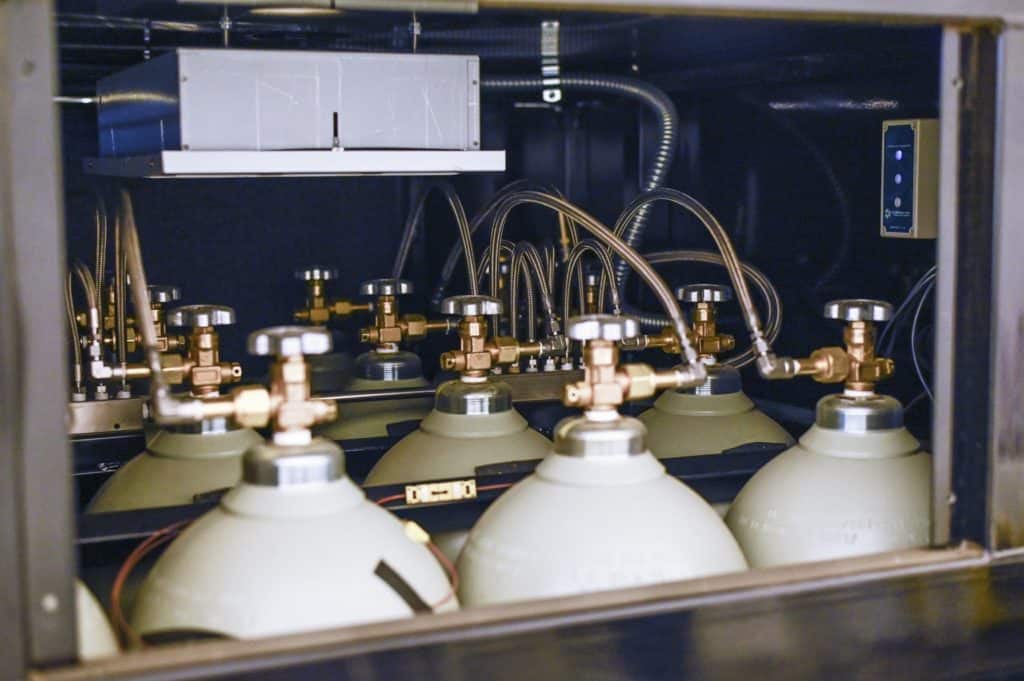
On the production floor
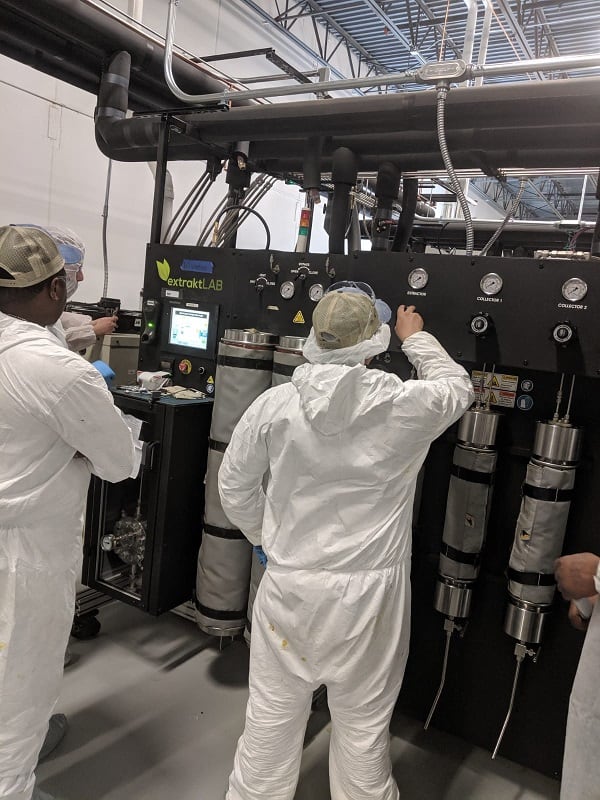
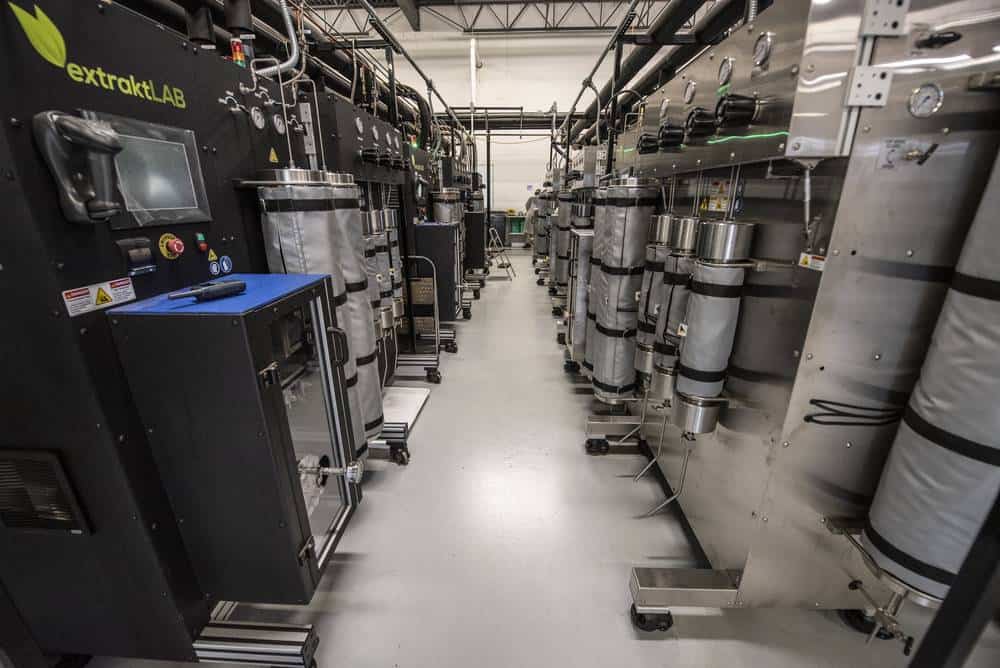
Photographs from the extraktLAB shop and production floor.
Specifications side by side
| Model | Extraction vessels | Pressure | Temperature | L × W × H | Footprint | Weight | Control |
|---|---|---|---|---|---|---|---|
| M-2.5 | 1 × 2.5 L | 55–345 bar (800–5,000 psi) | −10 to 100°C | 48.375 × 31.615 × 40.688 in, without light mast | 10.48 ft² (0.97 m²) | 804 lb (365 kg) | Touchscreen logging |
| e-110 | 2 × 5 L | 0–345 bar (0–5,000 psi) | 25–100°C | 99 × 34 × 72 in, without light mast | 24 ft² (2.23 m²) | 3,000 lb (1,361 kg) | Programmable cycles |
| e-140 | 2 × 20 L | 0–345 bar (0–5,000 psi) | 0–100°C | 99 × 34 × 72 in, without light mast | 24 ft² (2.23 m²) | 4,300 lb (1,950 kg) | Programmable methods and cycles |
| M-120 | 1 × 20 L | 5,000 psi (345 bar) | 0–100°C | 99 × 34 × 72 in | 24 ft² (2.23 m²) | ~2,200 lb | Manual |
| e-180 | 4 × 20 L | 0–5,000 psi (0–345 bar) | 0–100°C | 129 × 53 × 72 in, without light mast | 48 ft² (4.5 m²) | ~6,200 lb | Manual or automatic; touchscreen HMI |
SI equivalents are rounded from the model specification units. These ranges describe the named configurations, not instructions for running a process. Approved operating limits and required utilities are specified with the quoted equipment. The M-120 lists 5,000 psi; this page does not treat that figure as a published maximum-versus-operating rating.
For the e-180, operating pressure, overall dimensions and the control interface are taken from the public model brochure. Full-load current and chiller size are omitted because that brochure and the other inspected sources do not agree on those figures. Vessel count and the 48 ft² footprint are consistent across those sources. This page does not publish e-180 daily-throughput figures.
Process records and support
Process control
The e-110 and e-140 use programmable methods and cycles, independent vessel control, cyclonic separation and data capture, including event logging and lot traceability. The M-2.5 logs temperature and pressure on a touchscreen. The M-120 is a manual machine.
Built in the USA
Designed and manufactured by United Science in Osceola, Wisconsin, with commissioning, training and maintenance from the same team.
12-month warranty
The M-2.5, e-110, e-140 and M-120 have a 12-month warranty. Confirm the applicable terms and project scope in your quotation.
Documentation on quote
Ask us for the documentation that applies to the quoted configuration. Named certification marks are not listed here until the certificates are inspected.
Scale-up
Start with the vessel configuration that fits the method, then add equipment as the project grows. The M-2.5 can support method development for larger systems.
Complete package
For the M-2.5, the pictured pump, chiller and table are sold separately. The e-110 and e-140 require separately supplied chillers and cleaning, startup and critical-spares kits. The M-120 requires a 5 hp chiller, sold separately.
How to choose CO₂ extraction equipment
-
Material and method
Start with the feed material, the target fraction and the method you need to run. Vessel volume is not a daily production rating. Compare models against the same process requirements, and leave room to add a second unit later.
-
Floor space and utilities
Check the footprint, ceiling height and clearance around the machine, plus the electrical supply for the quoted configuration. The M-2.5, e-110 and e-140 are specified at 208–230 / 380 VAC.
-
Automation
Choose manual operation on the M-120, or programmable methods and cycles on the e-110 and e-140. The M-2.5 logs temperature and pressure for method development.
-
Product
Define the target fraction and collection requirements first. Optional co-solvent hardware can be specified on the M-2.5, e-110 and e-140 when the method needs it.
-
CO₂ supply and support
Plan bulk CO₂ with our CO₂ supply equipment, and add commissioning, training or a 12-month maintenance package as required.
Plan the equipment and the installation together
| Model | Equipment footprint | Electrical configuration | Required chiller, sold separately |
|---|---|---|---|
| M-2.5 | 0.97 m² (10.48 ft²) | 208–230 / 380 VAC; 1 phase; 50/60 Hz; 30 FLA | 1 hp |
| e-110 | 2.23 m² (24 ft²) | 208–230 / 380 VAC; 1 phase; 50/60 Hz; 57 FLA | 5 hp |
| e-140 | 2.23 m² (24 ft²) | 208–230 / 380 VAC; 3 phase; 50/60 Hz; 67 FLA | 5 hp |
| M-120 | 2.23 m² (24 ft²) | 208–240 V, 3 phase, 67 FLA | 5 hp |
| e-180 | 4.5 m² (48 ft²) | 208–230 / 380 VAC; 3 phase; 50/60 Hz | — |
These are equipment specifications, not a complete facility design. Confirm the voltage configuration, CO2 supply, cooling, access and height, service clearance and site requirements with the project team. Equipment footprint is not the total installed space requirement.

Test your material first
Send us a sample. We run it on our extractors and send back the yield, the settings we used, and whether the process is worth taking further.
Applications

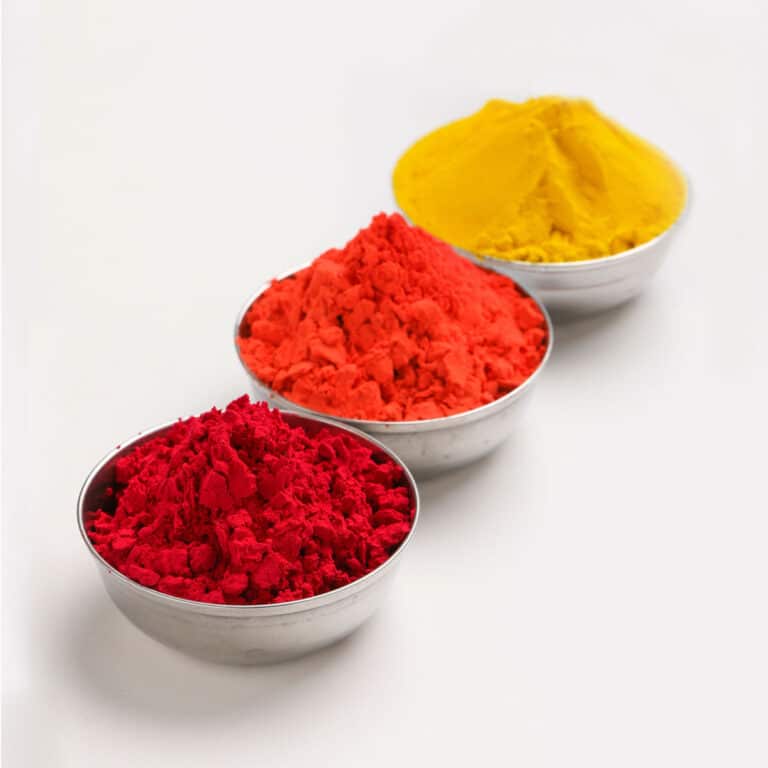
Nutraceuticals
Botanical ingredients for supplements and functional foods.

Essential oils and cosmetics
Essential oils and skin care actives extracted at low temperature to help protect volatile compounds.
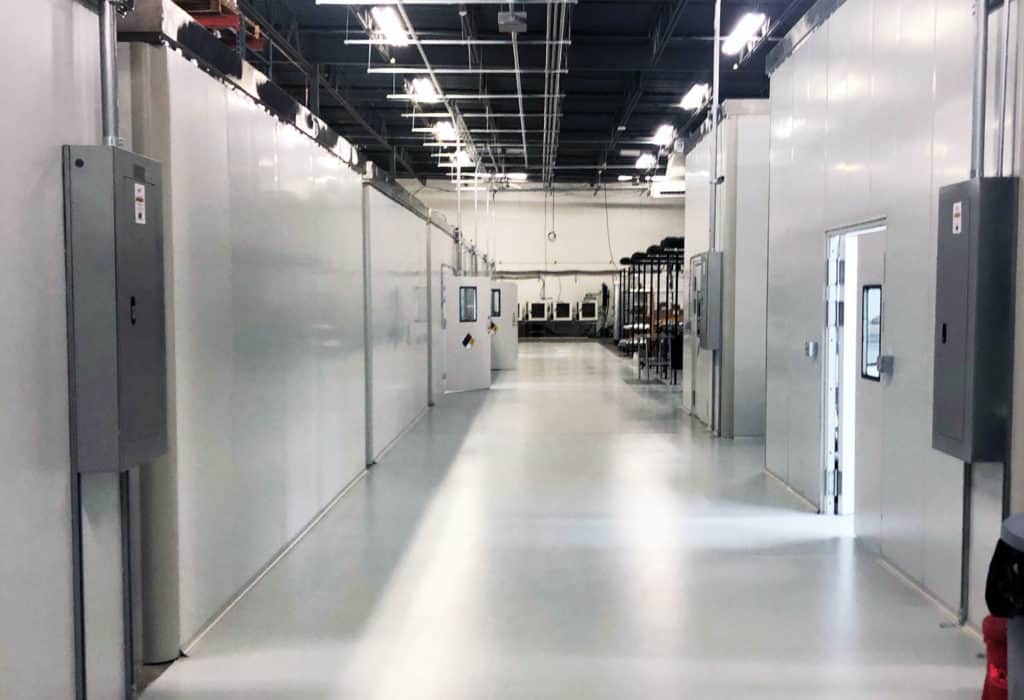
Waste valorization
Recover oils and colors from food and agricultural by-products. See waste valorization.
Frequently asked questions
What is a supercritical CO2 extraction machine?
It is a closed-loop system that raises CO2 above 31 °C (88 °F) and 73.8 bar (1,071 psi), passes it through ground plant material to dissolve oils and other compounds, then drops the pressure in a separator so the extract collects and the CO2 is recycled.
What size are the extraction vessels?
The M-2.5 has one 2.5 L (0.66 gal) extraction vessel, the e-110 has two 5 L (1.32 gal) vessels, the M-120 has one 20 L (5.28 gal) vessel, the e-140 has two 20 L vessels and the e-180 has four 20 L vessels.
How much biomass can a CO2 extractor process per day?
Daily capacity depends on the material, how the vessel is loaded, the method and the operating schedule. Vessel volume is not a daily production rating. We do not publish a daily throughput figure for the M-120, and this page does not publish e-180 pounds-per-day figures. Compare models against your process requirements, or discuss a feasibility study.
What pressure do CO2 extraction machines run at?
The M-2.5 covers 55–345 bar (800–5,000 psi). The e-110 and e-140 are specified at 0–345 bar (0–5,000 psi). Confirm the approved operating limits for the quoted configuration. For the e-180, confirm the quoted equipment configuration.
Where are extraktLAB extractors made?
They are designed and built in the USA by United Science in Osceola, Wisconsin.
What does a CO2 extraction machine cost?
It depends on the model, automation, voltage, documentation requirements and the support package. Email sales@extraktlab.com or call +1 651 600 0036 for a quote sized to your project.
Can I test my material before buying?
Yes. Send a sample and we run it on our extractors, then share the yield, the settings used and whether the process is worth taking further. See our feasibility studies.
Is a co-solvent system included as standard?
No. The M-2.5, e-110 and e-140 brochures describe co-solvent hardware as optional. Specify the method and required hardware with the equipment configuration.
Can the M-2.5 support method development for larger systems?
The M-2.5 brochure describes a method-development basis for larger E-series systems. Establish the feed, conditions, collection requirements and analytical endpoint for the intended scale; an R&D method alone is not a production-output guarantee.
Does the equipment footprint include all the space needed for installation?
No. Plan operating access, service clearance, height and ancillary equipment as well as the machine footprint. Confirm the site requirements for the specified configuration.
Is the M-120 available to order?
Yes. The M-120 is available to order. Discuss the configuration and project requirements with us.
Learn more about CO₂ extraction
- A complete guide to CO₂ extraction
The informational guide to the process.
- CO₂ supply equipment
Plan bulk CO₂ with the supply equipment.
- All extraction equipment
The current equipment catalog.
- M-2.5 model page
The current R&D model destination.
- e-110 model page
The current e-110 destination.
- e-140 model page
The current e-140 destination.
- M-120 model page
Manual extractor.
- e-180 model page
Access our FREE resources or contact us to learn more about getting help with your business plan. We are dedicated to providing you with the best advice, quality, and service in the industry.