Process Bone Grafts
in Hours.
Not Weeks.
Supercritical CO₂ technology decellularizes, defatts, sterilizes (SAL 10⁻⁶), and removes toxic residues in 1-4 hours — eliminating multi-day chemical washes while preserving ECM integrity and mechanical strength.
1-4 hrs
Decellularization time vs 3-14 days
SAL 10⁻⁶
Terminal sterilization assurance level
99.09%
α-Gal antigen removal from xenografts
31-37°C
Mild temperature preserves collagen
The Limitations of Traditional Bone Graft Processing
Conventional decellularization and sterilization methods create production bottlenecks, leave toxic residues, and compromise the structural integrity of bone grafts.
Supercritical CO₂: Integrated
Processing in One Cycle
Supercritical CO₂ operates above 31.1°C and 7.38 MPa, leveraging dual gas-liquid properties to penetrate bone tissue, decellularize in 1-4 hours, and integrate multiple processing steps into a single cycle.
Subcritical Water vs Traditional Solvents
|
Processing Factor |
Supercritical CO₂ Modern Integrated System |
Traditional Methods Detergents/Enzymes/Radiation |
|---|---|---|
|
Processing Time |
1-4 hours (< 3 days complex) |
3-14 days + weeks rinsing |
|
Cytotoxic Residues |
Zero – CO₂ evaporates completely |
SDS often exceeds 0.002% threshold |
|
Operating Temperature |
31-37°C (mild, collagen-safe) |
High heat damages collagen |
|
Sterilization Level |
SAL 10⁻⁶ terminal sterilization |
Variable, often requires separate step |
|
α-Gal Antigen Removal |
99.09% removal (xenografts) |
30.18% removal standard methods |
|
ECM Preservation |
Maintains porous structure & strength |
SDS/gamma degrades proteins & GAGs |
|
Residual DNA |
13.49 ng/mg (clinical DBM grade) |
Higher residual DNA levels |
|
Process Integration |
Single cycle: decellularization + sterilization |
Multiple separate processes |
|
GMP Compliance |
Validated GMP-compliant systems |
Variable compliance standards |
The Supercritical CO₂ Processing Cycle
Supercritical State Formation
CO₂ is pressurized above 7.38 MPa and heated above 31.1°C, creating a supercritical state with both gas and liquid properties for deep tissue penetration.
Decellularization & Defatting
Supercritical CO₂ penetrates dense bone tissue, removing cellular material and lipids in 1-4 hours while preserving the native porous architecture of cancellous bone.
Antigen & Residue Removal
Removes 99.09% of immunogenic α-Gal antigens from xenografts. Optional PAA additive enhances viral inactivation and breaks down to harmless acetic acid and water.
Terminal Sterilization
Achieves SAL 10⁻⁶ sterilization assurance level in the same cycle, meeting regulatory requirements for terminal sterilization without separate processing.
Complete Residue Removal
Upon depressurization, CO₂ reverts to gas and completely evaporates, leaving zero cytotoxic residues in the bone graft ECM. Ready for clinical use.
Clinical Performance Data
Bone grafts processed with supercritical CO₂ demonstrate superior clinical outcomes compared to traditional methods.
GMP-Compliant Processing Systems
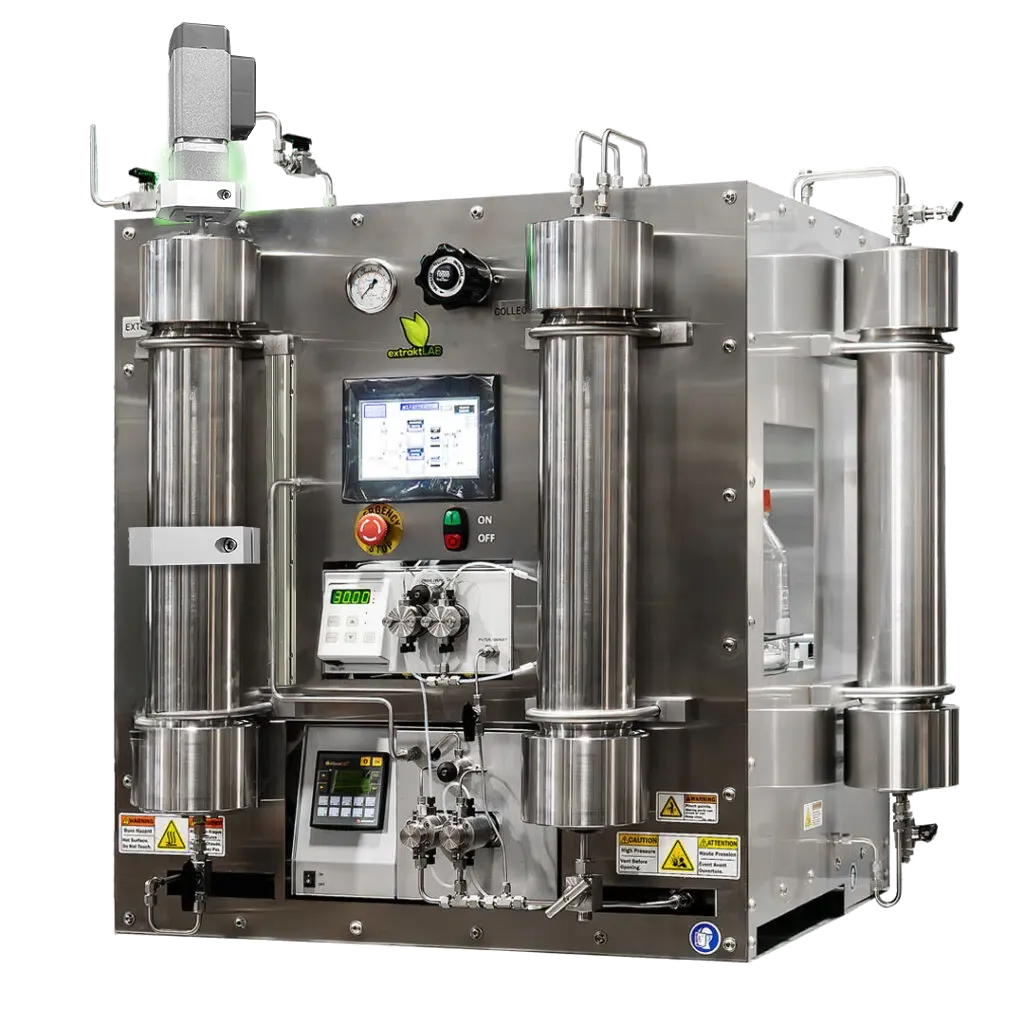
extraktLAB’s supercritical CO₂ systems meet GMP compliance standards with validated SAL 10⁻⁶ terminal sterilization, ensuring regulatory-ready bone graft production.
No pressure, no commitment. Just expert guidance to help you make the best decision for your business.
© 2025 extraktLAB. Professional subcritical water extraction equipment for botanical processing.
